Inflection Point
There have been many losses in my life so far.
Between 2022 and 2026, I lost people, relationships, friendships, family, pieces of the life I once recognized, and eventually parts of myself. I watched connections I believed were permanent disappear or become unrecognizable. More recently, I lost my cat—another life woven quietly into the fabric of my own.
Some losses arrive violently. Others happen so gradually that you do not realize something is gone until you instinctively reach for it and find nothing there. The people closest to me will understand what some of these words refer to. I do not think every loss needs to be explained publicly to be real. Some names belong to memory rather than a page. Some experiences are too intimate to dissect for strangers.
Still, taken together, they created an unmistakable fracture in my life.
An inflection point.
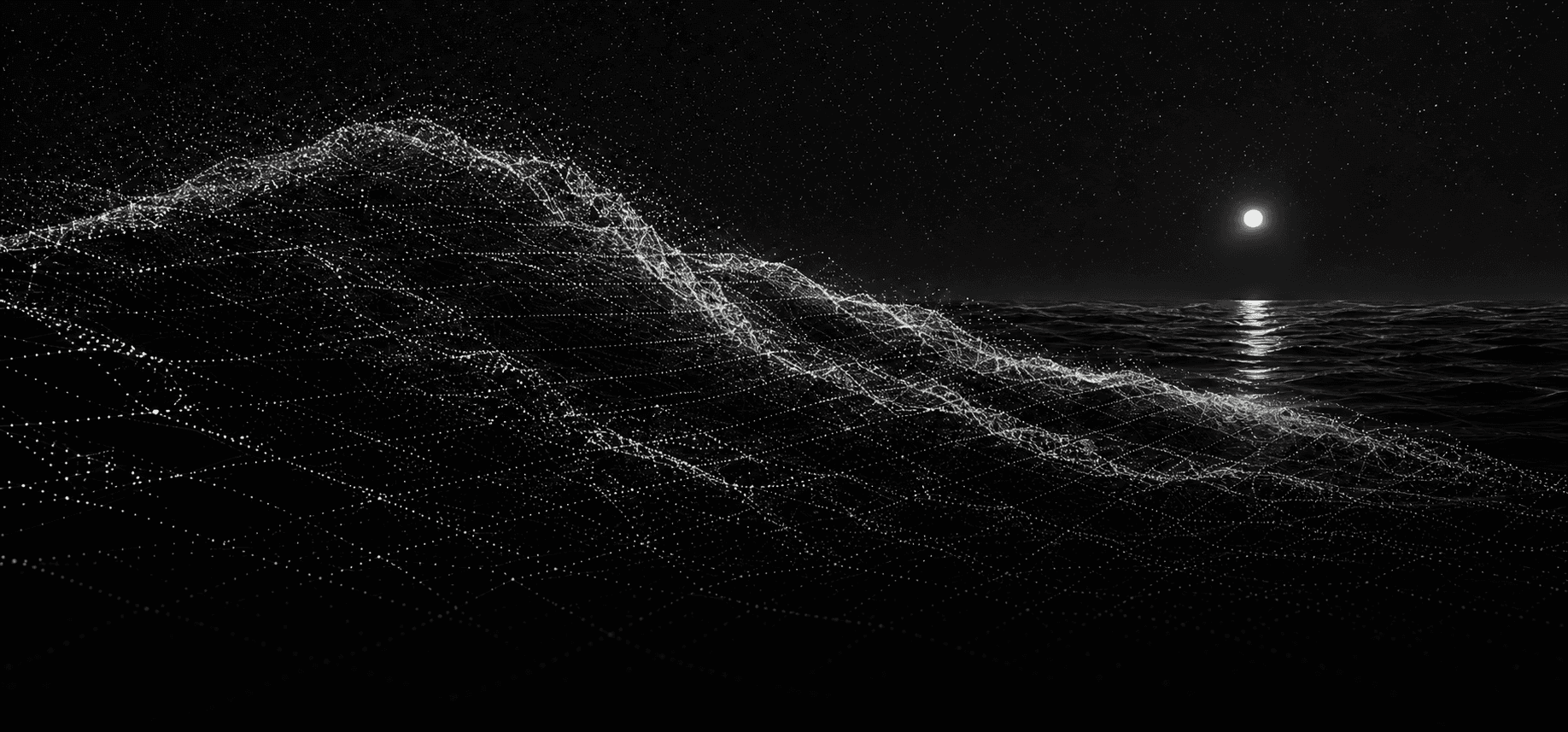
In mathematics, an inflection point is where a curve changes its direction of curvature. The function continues, but its behaviour is no longer the same. It does not necessarily stop or break. It simply begins bending differently. That is perhaps the closest language I have for what grief has done to me.
Life continued, technically. Days passed. The world moved with its usual indifference. People went to work, laughed, complained, celebrated birthdays, bought groceries, and made plans for next week. Meanwhile, the shape of my existence had changed. I was still moving forward, but the direction in which I bent had become unfamiliar.
Loss made me question the meaning of everything.
Why do we form attachments when every attachment carries the possibility of separation? Why do we build lives that can be altered by a phone call, a diagnosis, an argument, an accident, or a final breath? Why do we spend so much time worrying about status, money, approval, reputation, and other temporary measurements when all of them eventually collapse beneath the weight of mortality?
I tend to approach life as I approach most things: as a logic problem. I look for causes, patterns, variables, and explanations. I want events to connect into a coherent system. When something goes wrong, I want to understand why. When someone disappears from my life, I want the equation that explains their absence.
Perhaps that instinct is useful in physics. Grief, however, refuses to behave like a well-defined problem. There are too many unknown variables. The evidence is incomplete. The system is chaotic. Sometimes the result feels completely disproportionate to everything that preceded it. You can retrace every step and still find no satisfying answer.
Life possesses logic, but it is not obligated to make that logic accessible to us. From the grandest possible perspective, perhaps everything has a cause. Perhaps every event occupies its inevitable place in some structure too complex for us to perceive. Yet from the perspective of a person standing beside an absence, that possibility offers very little comfort.
A logically consistent universe can still be unbearably cruel.
The Dream
The philosophy that emerged from these experiences began, strangely enough, in a dream.
I wandered into a realm untouched by time and space: a pocket dimension in which nothing existed. There were no people, no objects, no movement, and not even rules governing what could or could not occur. It was not simply darkness. Darkness still implies the possibility of light. This was a void.
An endless expanse of despair that seemed to exist outside every familiar principle of reality. I was held there for reasons I could not understand. There was no destination, no escape, and no indication that anything had ever existed before me or would exist after me. It felt like an indictment for something. When I woke, the dream remained with me.
It forced me to imagine existence stripped of everything we normally use to define it. No time. No ambition. No hierarchy. No beauty. No conflict. No love. No memories. Nothing to anticipate and nothing to mourn.
That emptiness made ordinary life appear differently. Even pain requires existence. Grief requires that someone mattered. Loneliness requires the knowledge that connection is possible. The wound left by a person is shaped by the place they once occupied.
An empty universe cannot hurt, but it also cannot love.
In that infinity, there was nothing to do but reflect on the memories I retained, good or bad. I remained there with them until I woke.
Mortal Plagues
Human life is frequently obscured by things that appear important only because we collectively agree to treat them as important. We judge one another according to economic status, appearance, occupation, intelligence, influence, popularity, and power. We sacrifice time to maintain positions that death will eventually erase. We delay happiness because we are afraid of judgment from people who are themselves afraid of being judged.
I find it difficult to blame anyone entirely for this. We are born into systems that teach us what to desire before we are old enough to question those desires. We are told to compete, accumulate, perform, and prove ourselves. We learn to view our lives from the imagined perspective of an audience. Eventually, we may become so concerned with appearing successful that we forget to experience the life we are supposedly succeeding at.
These are the mortal plagues: false permanence, social hierarchy, pride, fear, resentment, and the belief that there will always be more time.
There may not be.
A person can be present one day and reduced to photographs, messages, possessions, and stories the next. A pet can occupy the same corner of a room for years, then suddenly transform that corner into an absence. A friendship can end without ceremony. A version of yourself can vanish while you are still alive, leaving you to grieve someone no one else knew existed.
This does not make life meaningless. It makes life fragile. Those are not the same thing.
The Purpose of Life
From these reflections, I arrived at a conclusion that is simple, perhaps imperfect, but deeply personal:
The purpose of life is to create memories.
Not to become the richest person in a cemetery. Not to achieve a flawless reputation. Not to satisfy every expectation placed upon you. Not to spend your entire existence preparing to live at some undefined point in the future.
To be present long enough for something meaningful to happen. To cherish moments with friends, family, lovers, animals, and kindred spirits. To share meals, jokes, conversations, journeys, arguments, discoveries, and silences. To do things that bring genuine joy and feel worthy of the finite time required to experience them.
A memory does not have to be extraordinary to matter. It can be sitting in a room with someone while nothing important happens. It can be hearing a familiar voice from another part of the house. It can be a cat sleeping nearby while you work. It can be laughing until the original joke becomes irrelevant. It can be a conversation that seemed ordinary at the time but becomes sacred after the person is gone.
We rarely recognize the final occurrence of something while it is happening. The last conversation does not announce itself. The final photograph looks like any other photograph. The last time someone enters a room, you may not even look up.
That is one of the quiet cruelties of being human: we experience life forward but understand its significance backward.
Memory is not a cure for grief. Sometimes memory sharpens it. It can turn a song, a date, a scent, or an empty chair into a doorway you did not intend to open.
Yet memories are also evidence. They prove that within an enormous and indifferent universe, two lives intersected. For some period of time, however brief, something existed instead of nothing.
Someone was here.
I was here with them.
We changed one another.
What Loss Leaves Behind
I would not claim that every loss happens for a reason. Some losses produce wisdom, but that does not make them fair. Growth does not justify the wound that caused it. I would return much of what I have learned in exchange for some of the people I learned it from.
There is a temptation to transform suffering into a grand narrative, to insist that pain was necessary because we cannot bear the possibility that it was senseless. I do not know whether everything happens according to some greater design. I do not know whether the universe keeps an account of what it takes from us.
What I know is that I remain.
Not unchanged. Not repaired into the person I was before. The earlier version of me belonged to a world in which certain people were still alive, certain relationships still existed, and certain futures still appeared possible. That world cannot be restored.
Perhaps healing is not restoration. Perhaps it is learning how to inhabit the new shape of your life without denying the old one existed.
The people and creatures I lost are not merely events that happened to me. They are part of the architecture of who I became. Their influence persists in my habits, thoughts, fears, humour, language, and decisions. Even absence can leave fingerprints.
I carry them, although not always gracefully. Some days, carrying them feels like an honour. On other days, it feels impossibly heavy. Both can be true.
After the Curve Changes
I do not think the goal is to eliminate grief. To eliminate grief completely would require erasing the love and meaning attached to it. Instead, I am trying to understand how to live beside it.
I am learning that meaning may not be something hidden in the universe waiting to be discovered. It may be something we create through attention.
We create meaning when we choose to care. We create it when we remain present with another person. When we tell someone we love them before the opportunity disappears. When we allow ourselves to enjoy something without demanding that it be productive. When we take photographs, make jokes, share ideas, forgive where forgiveness is possible, and leave behind evidence that we truly lived.
Life is not a problem I expect to solve anymore. It is a finite experience I am trying to witness.
The curve continues, even after it changes direction. I continue too, carrying the people I have lost and the versions of myself that could not follow me here. I do not know what exists beyond life. I do not know whether there is a final answer to the question of why we are here.
But while I am here, I want to create something stronger than the void of absence: a memory. A moment in which there was warmth instead of emptiness, connection instead of isolation, and something rather than nothing.
Perhaps that is enough.
Perhaps, for now, it has to be.
No one knows what the future holds. That is why its potential is infinite.